Frameless vs Semi-Frameless Shower Screens: Australia Guide
Quick summary: Frameless shower screens use thick 10mm or 12mm toughened glass with minimal metal hardware, giving a sleek look but costing more — typically $1,200 to $2,800 installed. Semi-frameless screens use thinner 6mm glass with an aluminium frame around the edges, usually costing $700 to $1,500 installed. Frameless is easier to clean and more durable long-term, but semi-frameless suits budget renovations and smaller bathrooms just as well.
Choosing between these two styles is one of the most common sticking points in a bathroom renovation. They look similar in photos, but the differences show up in your wallet, your cleaning routine, and how the screen performs over ten or fifteen years.
Frameless vs Semi-Frameless: What's the Real Difference
The short answer: it comes down to glass thickness and how much aluminium framing holds it up.
A frameless shower screen relies entirely on thick, toughened glass to do the structural work. There's no perimeter frame — just minimal hinges, a small top clamp bar in some cases, and polished edges. The glass itself is the star of the show.
A semi-frameless shower screen still uses a glass panel, but it sits inside (or against) an aluminium frame on at least one or two edges — usually the door edge and sometimes the top rail. The frame does some of the structural heavy lifting, which means the glass can be thinner.
What is the difference between frameless and semi-frameless shower screens?
In practical terms: frameless screens use 10mm–12mm glass with no visible metal border, while semi-frameless screens use 6mm glass with an aluminium frame around part of the panel. Frameless gives a cleaner, more minimalist look. Semi-frameless is more affordable and still looks tidy, just with visible metal edging.
How Each Style Is Built
Frameless screens typically use:
- 10mm or 12mm toughened safety glass
- Minimal stainless steel or chrome hinges and clamps
- Silicone sealing at the wall and floor junctions only
Semi-frameless screens typically use:
- 6mm toughened glass
- Aluminium framing on the hinge side and sometimes the top
- A sliding or hinged door mechanism supported by the frame
Cost Comparison for Australian Homes
This is where most homeowners make their decision. Glass thickness and framing directly affect price.
| Screen Type | Glass Thickness | Supply Only (per screen) | Supply + Install | Best For |
|---|---|---|---|---|
| Semi-frameless | 6mm | $450–$900 | $700–$1,500 | Budget renos, rentals, smaller bathrooms |
| Frameless | 10mm | $900–$1,800 | $1,200–$2,400 | Mid-range renovations |
| Frameless | 12mm | $1,300–$2,200 | $1,600–$2,800 | Premium builds, large walk-in showers |
Prices vary by state and by how custom the configuration is — a simple fixed panel and door costs far less than a curved or angled corner enclosure.
How much does a semi-frameless shower screen cost in Australia?
For a standard 900mm x 900mm corner shower, expect to pay between $700 and $1,500 fully installed. Bunnings and Mitre 10 stock some off-the-shelf semi-frameless kits from brands like Retto sliding shower screen starting around $650, though custom sizes from a local glazier will cost more.
Are frameless shower screens worth the extra cost?
For most homeowners, yes — if the budget allows. The extra $400–$800 buys you a cleaner look, easier cleaning (fewer frame crevices), and generally longer-lasting hardware. If you're renovating to sell within a couple of years, semi-frameless often delivers better value. If you're renovating your forever bathroom, frameless tends to age better visually.
Installation and Labour Costs
Labour typically runs $150–$400 per screen for standard installations, though this climbs for:
- Screens requiring wall re-tiling or waterproofing repairs
- Custom angles or curved glass
- Two-storey homes with tricky access
Most glaziers quote supply and install as a package. Get at least three quotes — pricing varies more between installers than between the actual screen styles.
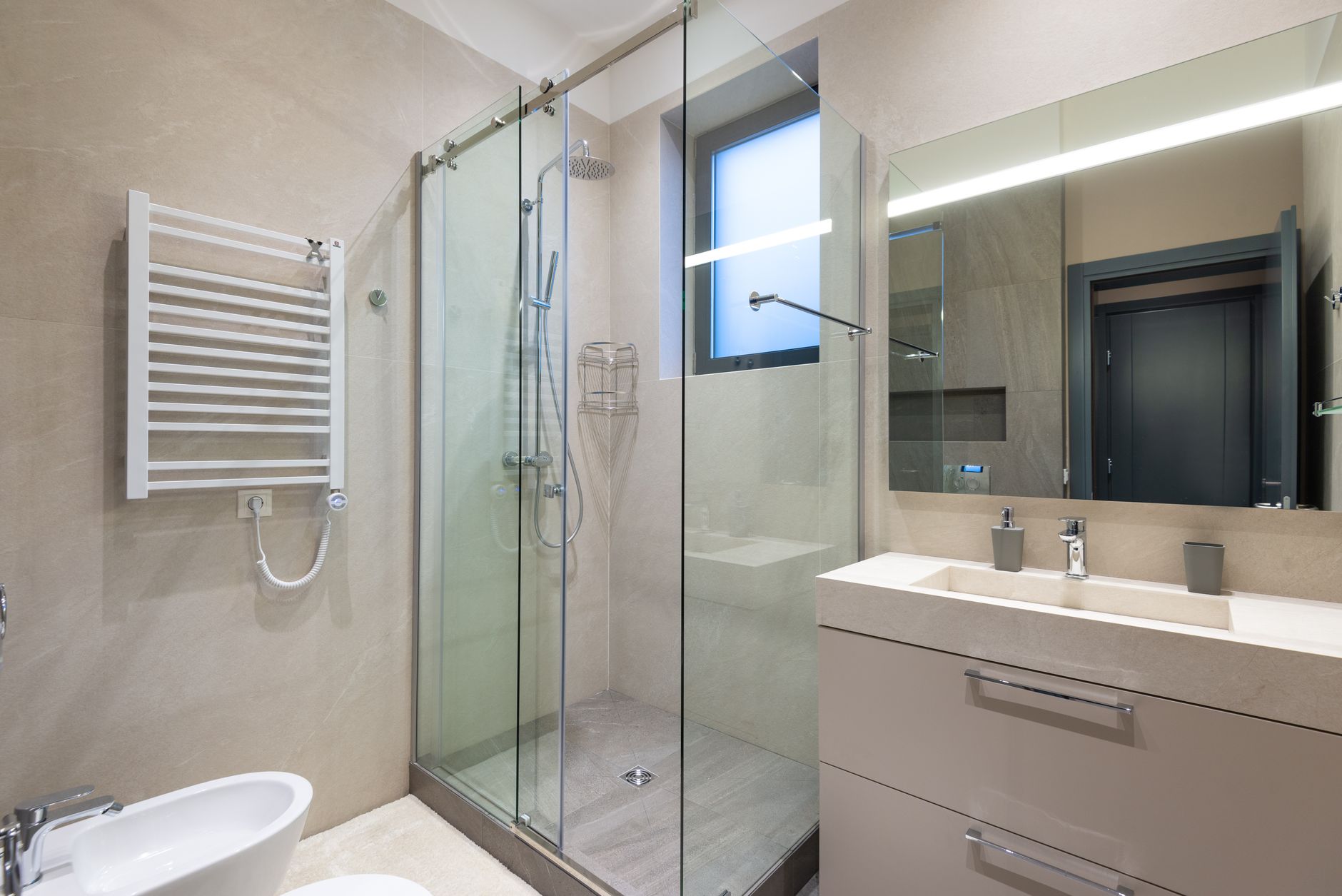
Cleaning and Maintenance Requirements
Which shower screen is easier to clean, frameless or semi-frameless?
Frameless wins here, and it's not close. With no aluminium frame to trap soap scum, mould, and mineral deposits, a squeegee and a microfibre cloth after each shower keeps frameless glass looking new for years.
Semi-frameless screens have small channels where the frame meets the glass. Grime and black mould build up in these gaps over time, and they're harder to reach with a standard cloth.
Practical tips for both:
- Use a squeegee like the OXO Good Grips squeegee straight after showering
- Apply a glass protection coating such as Invisi Shield glass protection during installation to reduce water spotting
- For semi-frameless frames, an old toothbrush and diluted white vinegar clears mould from channels monthly
Durability and Water Sealing Performance
Both styles use toughened safety glass, so breakage risk is similarly low when properly installed. The bigger difference is in water containment.
Semi-frameless frames include rubber or PVC seals along the frame edges, which do a solid job of directing water back into the shower base. Over time, these seals can perish, harden, or shrink — usually needing replacement every 8–12 years.
Frameless screens rely on precise glass-to-glass or glass-to-wall gaps combined with silicone sealing. There's less rubber to degrade, but the gaps need to be professionally set — a poorly installed frameless door can leak more than a semi-frameless one.
Australian Glass Standards Explained
What glass thickness is required for shower screens in Australia?
Under AS 1288 (Glass in Buildings — Selection and Installation), shower screens must use toughened safety glass, minimum 5mm, though 6mm is the practical standard for semi-frameless and 10mm–12mm for frameless designs given their lack of frame support.
Look for the AS/NZS 2208 stamp etched into a bottom corner of the glass — this confirms it's genuine toughened safety glass, not just annealed glass masquerading as "safety" stock. Never accept a shower screen without this marking, regardless of price.

Which Style Suits Your Bathroom Size
Bathroom dimensions matter more than most people expect.
Small bathrooms (under 4m²): Semi-frameless sliding doors work well because the frame adds minor rigidity without needing swing clearance. Frameless hinged doors need 700mm–800mm of swing space, which cramped bathrooms often can't spare.
Mid-size bathrooms: Either style works. Frameless hinged doors look more premium if you have the floor space; semi-frameless sliders save money without looking cheap.
Large bathrooms and walk-in showers: Frameless is the natural choice. Large glass panels with minimal hardware suit open, spacious layouts and make the room feel bigger rather than chopped up by metal framing.
Making the Right Choice for Your Renovation
Ask yourself three questions before deciding:
- What's my actual budget ceiling? If it's under $1,000 per screen, semi-frameless is realistic; frameless likely isn't unless you shop sales.
- Am I renovating to sell or to stay? Selling soon favours semi-frameless value; staying long-term favours frameless durability and appeal.
- How much floor space do I have? Tight bathrooms often suit sliding semi-frameless doors better than swinging frameless ones.
Also check with your builder or glazier about waterproofing membrane condition before installing either style — a brand-new $2,000 frameless screen won't fix an ageing waterproofing membrane underneath.
Bottom Line
Frameless shower screens deliver a cleaner look, easier cleaning, and better long-term durability, but cost roughly 40–60% more than semi-frameless options. Semi-frameless screens remain a smart, budget-friendly choice that still looks modern and performs well for most Australian bathrooms.
If your budget stretches to it and your bathroom has the space, frameless is the better long-term investment. If you're working to a tighter budget or renovating a smaller ensuite, a quality semi-frameless screen from a reputable supplier will serve you just as well for a fraction of the cost.