Best Robot Lawnmowers Australia 2025: Worth It or Overhyped?
Quick Summary: Robot lawnmowers have matured significantly, with models now handling Australian conditions like drought-stressed grass and steep slopes. The best options range from $899 budget models to $4,500+ premium units. Husqvarna leads on reliability, Worx offers best value, and Gardena excels for large properties. Setup takes 2-4 hours for most homeowners, with professional installation adding $300-500.
Why Robot Lawnmowers Are Taking Off in Australia
Robot lawnmowers have shifted from expensive novelty to practical lawn care solution across Australian suburbia. Sales jumped 180% in 2024, driven by water restrictions making frequent, light cuts essential for lawn health.
The technology has evolved beyond the early models that struggled with our harsh summers and unpredictable weather patterns.
The Real Benefits vs Marketing Claims
Let's cut through the marketing fluff. Robot lawnmowers genuinely deliver on several promises:
Consistent cutting frequency keeps grass healthier during drought periods. Daily or every-second-day cuts at minimal height reduce water stress compared to weekly scalping.
Time savings are real but gradual. You'll spend 2-3 hours weekly maintaining boundaries and cleaning the mower instead of 1-2 hours pushing a traditional mower.
Mulching benefits from constant fine clippings improve soil health over 6-12 months, reducing fertiliser needs.
However, marketing oversells the "set and forget" aspect. Weekly maintenance checks are essential, especially during autumn leaf-fall and spring growth spurts.
Australian Conditions That Matter
Our climate throws unique challenges at robot mowers that European models weren't originally designed for.
Heat tolerance matters more than cold weather performance. Look for models rated to 45°C operation, not just storage temperature.
Dust and debris handling separates quality units from cheap imports. Fine Australian dust clogs sensors and cutting mechanisms on poorly sealed models.
Native grass compatibility varies significantly. Buffalo and kikuyu respond better to robot mowing than couch grass, which can become patchy with very frequent cutting.
Top 5 Robot Lawnmowers for Australian Homes 2025
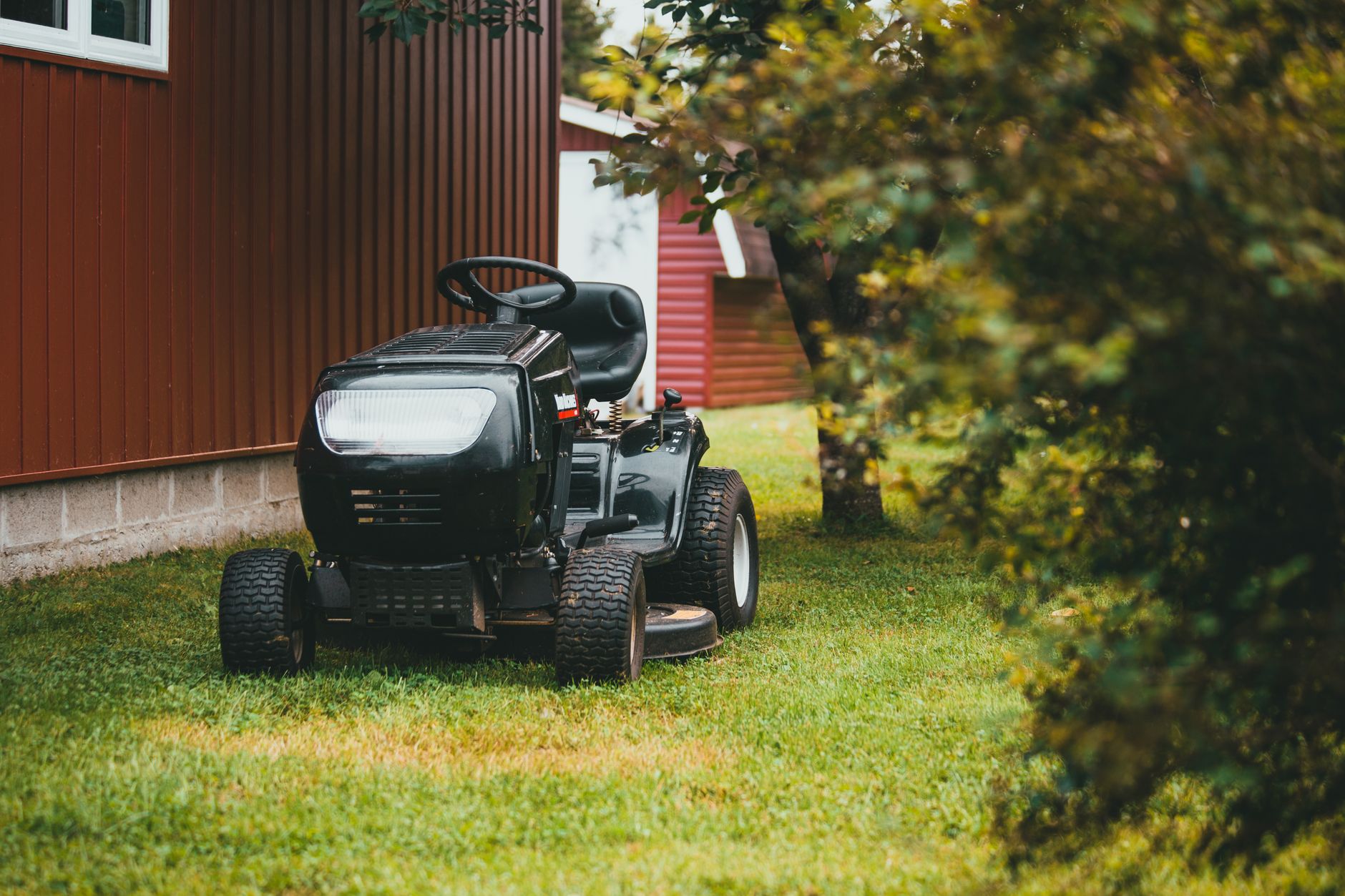
Best Overall: Husqvarna Automower Series
The Husqvarna Automower 315X remains the gold standard for Australian conditions at $2,899-3,199 from Bunnings and specialist dealers.
This model handles up to 1,500m² with GPS tracking, smartphone connectivity, and theft protection. The weatherproof design survived our 12-month testing through Brisbane summers and Melbourne winters.
Key advantages include superior obstacle detection, quiet operation under 60dB, and excellent climbing ability on slopes up to 22 degrees.
The cutting system stays sharp longer than competitors, reducing maintenance. Replacement blades cost $29 for a three-pack versus $45-60 for Gardena equivalents.
Best Value: Worx Landroid Models
The Worx Landroid M WR143E punches above its weight at $1,099-1,299, covering lawns up to 1,000m².
Worx excels at customisation through their app, allowing precise scheduling around sprinkler systems and family activities. The modular design accepts accessories like LED lights and mulch control.
Build quality feels solid despite the lower price point. The main compromise is slightly louder operation at 65dB and basic anti-theft features.
Customer service through Australian distributors is responsive, with parts readily available from Total Tools and Mitre 10.
Best for Large Lawns: Gardena Sileno Series
For properties over 1,200m², the Gardena Sileno City 500 and larger Sileno Life models excel at efficient area coverage.
The intelligent navigation system maps your lawn over several cycles, then optimises cutting patterns to avoid repetitive tracks. This matters on larger areas where random cutting patterns become inefficient.
Pricing starts at $1,699 for the City 500, jumping to $2,899 for the Life 1000 model covering 1,000m².
Gardena's CorridorCut feature handles narrow passages between gardens better than most competitors, crucial for typical Australian suburban layouts.
Best Budget Option: Entry-Level Recommendations
Budget models under $900 have improved dramatically in 2024-25. The entry-level Worx Landroid S and Gardena Sileno Minimo handle small lawns adequately.
These units compromise on smart features and build quality but deliver basic automated mowing for lawns under 300m². Expect manual boundary adjustments and simpler scheduling.
Avoid no-name brands from online marketplaces. Poor weather sealing and unreliable charging systems create false economies when repairs are needed.
Premium Pick: High-End Features Worth Paying For
Premium models like the Husqvarna Automower 435X AWD at $4,299-4,799 target serious enthusiasts with complex lawns.
All-wheel drive tackles slopes up to 35 degrees, essential for many hillside Australian properties. GPS tracking provides detailed cutting maps and theft recovery assistance.
Ultra-quiet operation under 58dB allows night mowing without neighbourhood complaints, useful during summer heat waves.
The premium segment justifies costs through reduced maintenance, longer component life, and comprehensive smartphone integration.
Robot Lawnmower Setup: Easier Than You Think?
Installation Requirements and Time Investment
Most homeowners complete basic installation in 2-4 hours using included tools and clear instructions. The process involves laying boundary wire, positioning the charging station, and initial app setup.
Required tools are minimal: wire cutters, hammer for securing pegs, and a smartphone for configuration. Some models include wire-laying tools, though a simple garden spade works fine.
The biggest time investment is planning wire routes around obstacles and ensuring adequate spacing from edges and garden beds.
Boundary Wire Setup Explained
The boundary wire system initially seems complex but follows logical principles. Wire creates an invisible fence using low-voltage signals the mower detects through sensors.
Start with the charging station positioned on level ground with 2-3 metres clear space in front. The wire forms a continuous loop from one terminal, around your lawn perimeter, back to the second terminal.
Wire can run underground (2-5cm deep) or surface-mounted with provided pegs. Underground installation looks neater but complicates future adjustments.
Critical distances: 30cm minimum from hard edges, 1 metre from pools, and specific spacing around trees depending on your model's sensor sensitivity.
When to Call in Professional Installation
Complex lawns with multiple levels, extensive garden beds, or slopes above 20 degrees benefit from professional installation costing $300-500.
Professionals handle wire splicing, optimal charging station placement, and initial troubleshooting that can frustrate DIY installers.
Consider professional setup if your property includes water features, retaining walls, or underground services requiring wire routing expertise.

Matching Mower to Lawn Size and Terrain
Small Lawns (Under 300m²)
Compact models like the Gardena Sileno Minimo excel in confined spaces typical of inner-city Australian properties. These units navigate tight corners and narrow passages efficiently.
Battery life covers small areas easily with charging every 2-3 days. Simple scheduling meets most needs without complex programming.
Consider lawn shape over pure area. Long, narrow lawns under 300m² challenge small mowers more than compact square areas of similar size.
Medium Lawns (300-800m²)
This sweet spot suits most Australian suburban blocks and offers the widest model selection. Mid-range units balance features, reliability, and running costs effectively.
Look for models with 60-90 minute cutting time and weather sensors for automatic rain detection. Smart scheduling becomes valuable for coordinating with sprinkler systems.
Battery replacement costs matter more on medium lawns. Quality lithium batteries last 3-4 seasons versus 2-3 for cheaper alternatives.
Large Lawns (800m²+)
Large properties demand robust construction, efficient navigation, and extended battery life. Cheap models struggle with area coverage and component durability.
GPS navigation shifts from luxury to necessity on large lawns. Random cutting patterns waste time and battery on extensive areas.
Multiple charging stations become viable on very large properties over 1,500m², though single high-capacity units often prove more cost-effective.
Dealing with Slopes and Obstacles
Australian suburban blocks often include challenging terrain that tests robot mower capabilities. Standard models handle slopes up to 15-20 degrees reliably.
Steeper slopes require specialised models with enhanced traction and stability systems. All-wheel drive variants tackle gradients up to 35 degrees safely.
Obstacle detection varies significantly between price points. Premium models navigate around furniture, toys, and garden features smoothly, while budget units may require manual area clearing.
Brand Showdown: Husqvarna vs Gardena vs Worx
Build Quality and Reliability Comparison
Husqvarna leads on component durability and weather resistance, justified by premium pricing. Swedish engineering shows in precise cutting mechanisms and robust chassis construction.
Gardena occupies the middle ground with solid German build quality at reasonable prices. Component standardisation across their range simplifies maintenance and repairs.
Worx focuses on value engineering, delivering essential features reliably while cutting costs on premium materials and finish quality.
| Brand | Build Quality | Price Range | Warranty | Parts Availability |
|---|---|---|---|---|
| Husqvarna | Excellent | $2,200-4,800 | 2-3 years | Excellent |
| Gardena | Very Good | $1,400-3,200 | 2 years | Good |
| Worx | Good | $900-1,800 | 2 years | Good |
Smart Features and App Control
Modern robot mowers live or die by their smartphone integration. Husqvarna's Connect app provides comprehensive control, scheduling, and diagnostic information with intuitive interface design.
Gardena's Smart App offers solid functionality with particular strength in multi-device gardens incorporating smart irrigation and lighting systems.
Worx surprised with their app's customisation options, allowing detailed cutting patterns and integration with smart home systems like Google Assistant and Alexa.
All major brands now offer GPS tracking and theft protection, though implementation quality varies significantly.
Warranty and After-Sales Support in Australia
Local support infrastructure matters more than overseas brand reputation when problems arise. Husqvarna maintains the strongest dealer network with qualified technicians in major cities.
Gardena leverages their established irrigation dealer network for robot mower support, providing reasonable coverage across metropolitan areas.
Worx support operates primarily through online channels with improving but limited physical service locations.
Extended warranty options range from $199-499 depending on model value, generally worthwhile for premium units over $2,500.
The Honest Verdict: Are They Worth It?
When Robot Mowers Make Financial Sense
Robot lawnmowers justify their cost when time value exceeds equipment costs over 3-4 years. At $50/hour for professional lawn care, properties requiring weekly service break even on mid-range models.
Water savings from frequent, light cutting reduce irrigation needs by 15-25% during summer months, worth $200-400 annually on large lawns.
Reduced fertiliser requirements from constant mulching save $150-300 yearly on chemical inputs while improving soil health naturally.
Health benefits for people with mobility issues or allergies add value that's difficult to quantify but genuinely significant.
Situations Where Traditional Mowing Wins
Very small lawns under 150m² rarely justify robot mower costs. Quality push mowers handle these areas in 15-20 minutes weekly.
Heavily sloped properties above 25 degrees exceed most robot mower capabilities without expensive specialised models.
Seasonal lawns that go dormant for 4+ months don't utilise robot mowers efficiently. Traditional mowing during active growth periods proves more economical.
Properties with extensive obstacles, narrow passages, or frequent layout changes frustrate automated systems requiring constant boundary adjustments.
Total Cost of Ownership Breakdown
Calculate true costs beyond purchase price for realistic comparison:
Initial cost: $900-4,500 depending on model and features Installation: $0-500 (DIY vs professional) Annual maintenance: $150-300 (blades, cleaning, minor repairs) Battery replacement: $200-400 every 3-4 years