Understanding Australian Electrical Safety Standards: DIY Limits
Quick summary: In Australia, almost all fixed electrical wiring work must be done by a licensed electrician — it's not optional, and it's not about skill level. Homeowners can legally handle low-voltage tasks, replacing appliance cords, and simple fixture swaps in some states, but changing a light fitting or powerpoint yourself is illegal in most cases. Rules vary slightly by state, RCD safety switches are mandatory on most circuits, and getting caught doing unlicensed work can void your home insurance and attract fines of $10,000 or more.
What Counts as Electrical Work Under Australian Law
Under Australian law, "electrical work" has a specific legal definition, and it's broader than most homeowners assume.
It covers any work involving the connection, disconnection, installation, alteration, repair or maintenance of electrical wiring or equipment that's connected to, or intended to be connected to, an electricity supply. That includes anything on the "fixed" side of your home's wiring — the stuff behind the walls, in the switchboard, and hardwired into the ceiling.
This is regulated nationally through the Electrical Safety Framework and enforced by each state's regulator (like NSW Fair Trading, Energy Safe Victoria, or the Electrical Safety Office in Queensland). The rules exist because electrical faults are a leading cause of house fires and a serious electrocution risk — this isn't red tape for the sake of it.
Fixed Wiring vs Low-Voltage Tasks
The line that matters most is fixed wiring versus low-voltage or plug-in tasks.
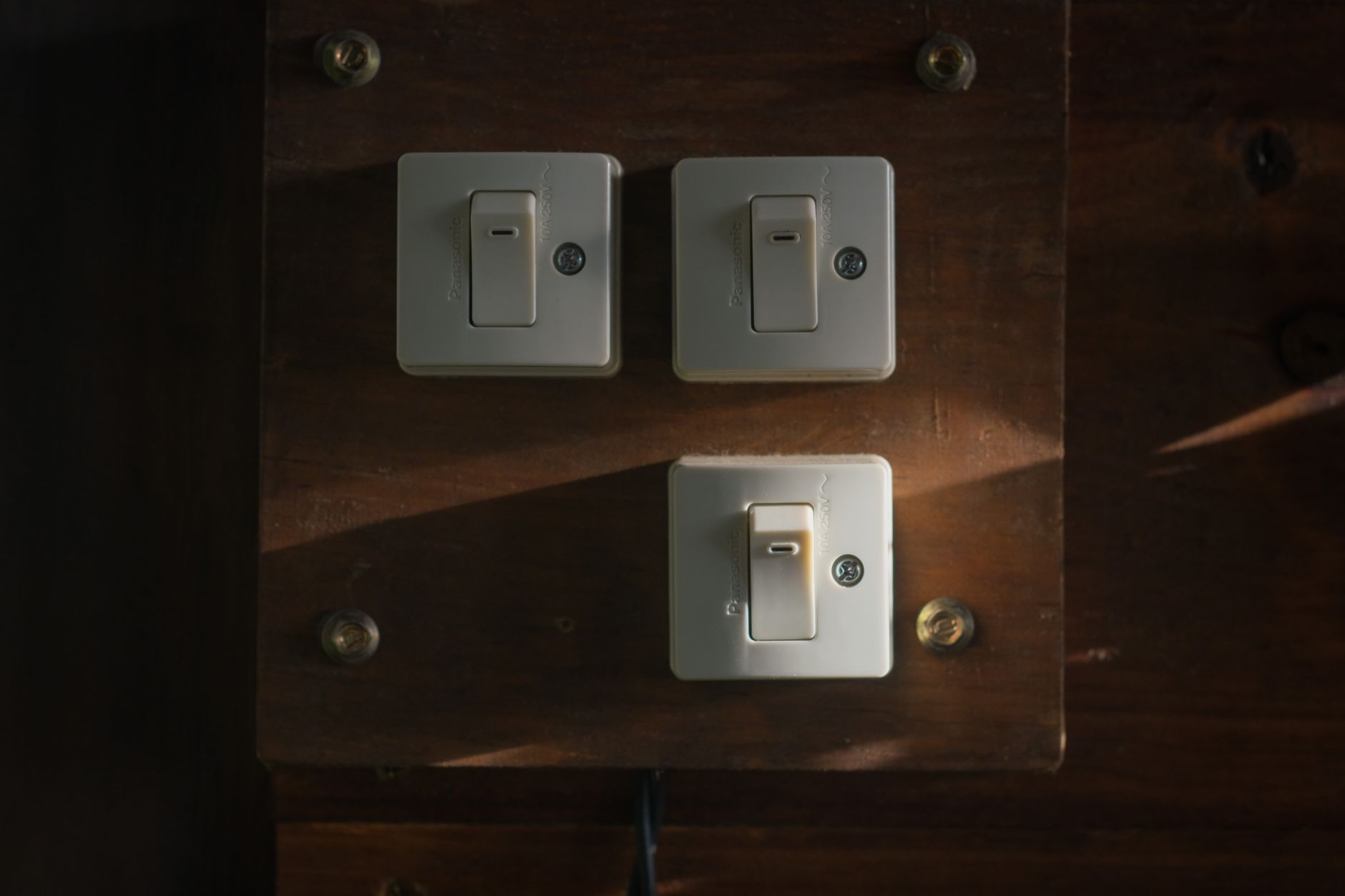
Fixed wiring includes anything hardwired into your home's electrical system — light fittings, powerpoints, switchboards, ceiling fans wired directly in, and any cabling running through walls or roof cavities. This is strictly licensed-electrician-only territory.
Low-voltage and plug-in tasks are a different story. Things like extra-low voltage garden lighting (12V or under), replacing a plug on an appliance cord, or connecting a lamp are generally fine for homeowners to handle.
The general rule of thumb: if it plugs in, you're usually okay. If it's screwed into a wall or ceiling and connects to permanent wiring, it isn't.
What DIY Electrical Work Is Actually Legal
So, what electrical work can I legally do myself in Australia?
The answer is: less than most people think. You can replace a broken appliance plug, install battery-powered LED lights, connect low-voltage garden lighting systems, and do general handyman tasks like mounting a TV bracket (as long as you're not touching the wiring itself).
Is it illegal to do your own electrical work in Australia?
Yes — for anything involving fixed wiring, it's illegal without an electrical licence, regardless of your confidence or experience. This applies even if you're just "having a look" at a faulty circuit. Simply removing a powerpoint cover plate to inspect wiring can technically breach the rules in some states.
Approved Tasks Homeowners Can Do
Here's a practical list of what's genuinely allowed:
- Replacing a plug on a lamp or appliance cord
- Installing plug-in power boards and surge protectors
- Setting up battery-operated smoke alarms
- Installing extra-low voltage (12V/24V) garden lighting kits, like the Brilliant Lighting solar garden light kit
- Mounting light fittings that are entirely battery-powered
- General maintenance like cleaning light diffusers or replacing globes in an existing fitting (the globe itself, not the fitting or switch)
Do I need a licensed electrician to change a light fitting?
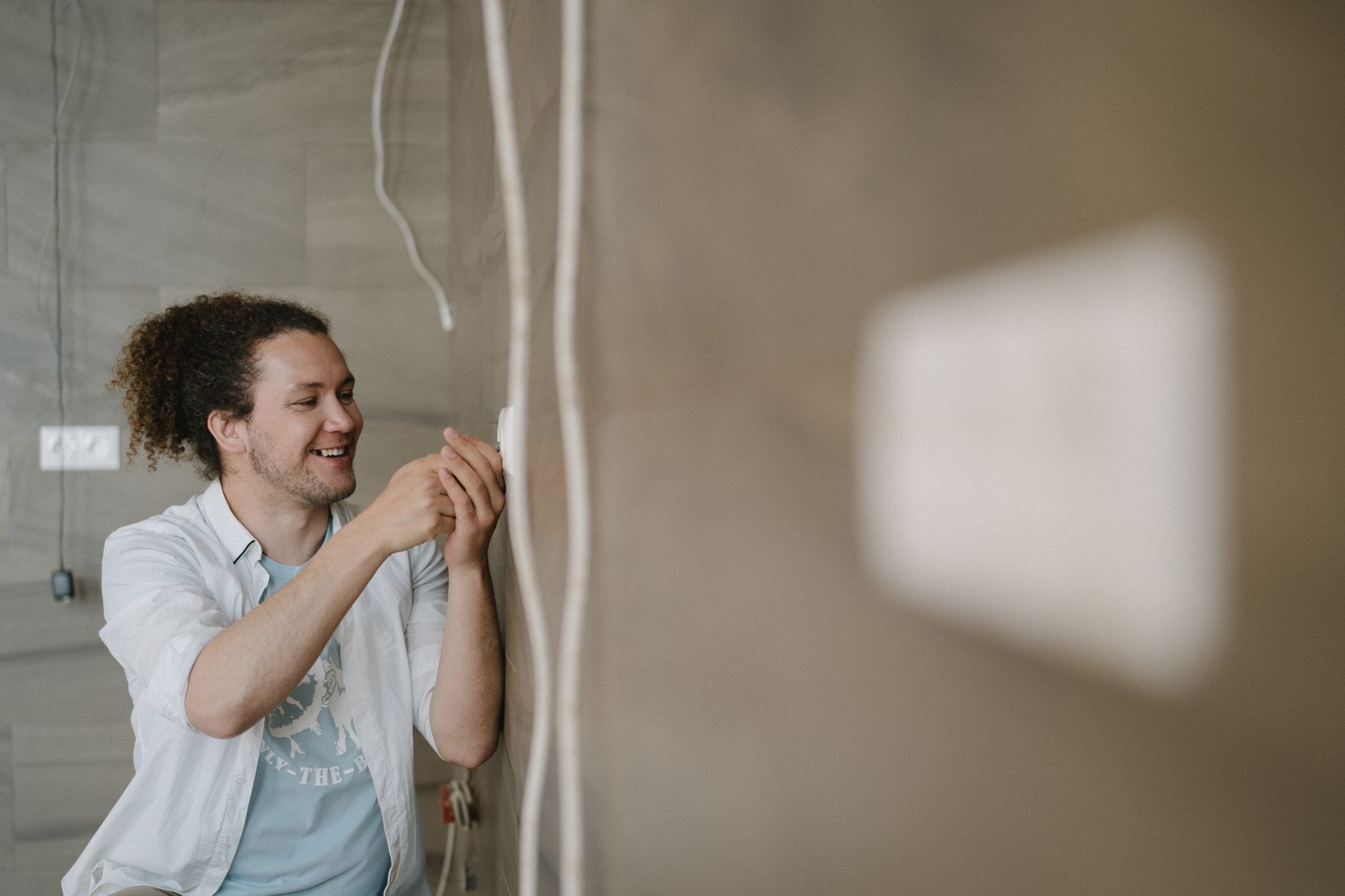
Yes. Even something as simple as swapping an old light fitting for a new pendant involves connecting to fixed wiring, which legally requires a licensed electrician. It doesn't matter that the task looks simple on a YouTube tutorial — the legal requirement is about the connection point, not the difficulty.
State-by-State Differences in Electrical DIY Rules
Electrical licensing is regulated at the state level, so while the core principle (fixed wiring needs a licence) is consistent nationally, the fine print differs.
| State | Regulator | Notable Detail |
|---|---|---|
| NSW | Fair Trading NSW | Strict enforcement; unlicensed work can void building insurance |
| VIC | Energy Safe Victoria | Requires Certificate of Electrical Safety (COES) for most jobs |
| QLD | Electrical Safety Office | Among the strictest; on-the-spot fines for unlicensed work |
| WA | Building and Energy WA | Licensing applies even to low-risk-seeming tasks like fixing a doorbell wired to mains |
NSW, VIC, QLD and WA Variations
In NSW, any fixed electrical work requires a licensed electrician, and for many jobs a Certificate of Compliance (CCEW) must be lodged. Skipping this step can cause real problems if you ever sell the property.
In Victoria, licensed electricians must issue a Certificate of Electrical Safety for prescribed work, which the homeowner should keep on file — it's often requested during conveyancing.
Queensland has some of the toughest enforcement in the country, with the Electrical Safety Office actively investigating unlicensed work complaints and issuing fines that scale into the thousands.
Western Australia takes a similarly strict line, and there's less tolerance for the "it's just a doorbell" argument — if it's wired into mains power, it needs a licensed sparkie.
The safest approach anywhere in Australia: if in doubt, assume you need a licensed electrician and get a quote from a provider through Hipages, Airtasker, or a local outfit listed on Bunnings' trade referral service.
Understanding RCD Safety Switch Requirements
RCDs (Residual Current Devices), commonly called safety switches, are a core part of Australia's electrical safety standards. They cut power within milliseconds if they detect current leaking to earth — which is what happens in most electrocution scenarios.
Do all powerpoints need RCD protection in Australia?
As of the current Australian Wiring Rules (AS/NZS 3000), all power circuits and lighting circuits in most residential properties need RCD protection, and this has been progressively tightened since 1991. Older homes built before these updates may not be fully compliant, which is one reason RCD upgrades are one of the most common jobs licensed electricians are called out for.
A standard switchboard upgrade adding RCD protection typically costs between $300 and $600 through a licensed electrician, depending on the number of circuits. It's one of the best-value safety upgrades you can make in an older home, and many landlords are now legally required to have them installed under state-based rental safety standards.
You can buy RCD-protected powerboards, like the HPM safety switch powerboard , for around $40–$60 as an added layer of protection for older homes — but this doesn't replace the need for switchboard-level RCDs.
Risks and Penalties of Non-Compliant Electrical Work
What happens if you get caught doing unlicensed electrical work?
Penalties vary by state but are consistently serious. In Queensland, fines for unlicensed electrical work can exceed $19,000 for individuals. In NSW, penalties under the Home Building Act can also run into the tens of thousands, particularly if the work is discovered during a property sale or after an incident.
Beyond fines, there's a genuine safety risk. Faulty DIY wiring is a leading cause of house fires, and unlicensed work is far more likely to fail inspection or cause long-term hazards that aren't obvious until something goes wrong.
Insurance and Legal Consequences
This is where it really bites. Most Australian home insurance policies contain clauses that void cover for damage caused by non-compliant electrical work. If an unlicensed installation causes a house fire, insurers can — and do — reject claims entirely.
It also affects selling your home. Unlicensed electrical work discovered during a building inspection can delay settlement, reduce your sale price, or require costly rectification before a buyer's finance is approved.
When to Call a Licensed Electrician
As a rule, call a licensed electrician for anything involving:
- New powerpoints or light fittings
- Switchboard or RCD upgrades
- Ceiling fan installation (hardwired types)
- Any circuit that's tripping, sparking, or smells burnt
- Renovation work involving new circuits or rewiring
- Solar panel or EV charger installation
A standard callout for a licensed electrician in most capital cities runs from $90–$150 for the first hour, plus parts. For anything beyond changing a globe or plugging something in, it's the only legal — and safe — option.
Bottom Line
DIY electrical work in Australia is legal only for a narrow band of low-voltage and plug-in tasks — everything touching fixed wiring needs a licensed electrician, full stop. The rules differ slightly by state, but the underlying principle is consistent nationally and enforced with real penalties.
RCD safety switches are non-negotiable in modern homes, and if your property predates the current wiring rules, an upgrade is one of the smartest, most affordable safety investments you can make. When in doubt, the cost of calling a licensed electrician is always cheaper than the cost of an insurance claim being denied.


