Shower Niche Ideas: Built-in vs Tile Insert vs Corner Shelves
Quick summary: Built-in tile niches look the best and add resale value but cost $400–$1,200 including waterproofing and take longer to install. Prefabricated metal inserts ($150–$450) offer a middle ground with fewer waterproofing headaches. Corner caddies and floating shelves are the cheapest and fastest options, starting under $30, but they don't suit every bathroom style. Your choice depends on budget, whether you're renting or renovating for the long haul, and how much waterproofing risk you're comfortable managing.
What Is a Shower Niche and Why Add One
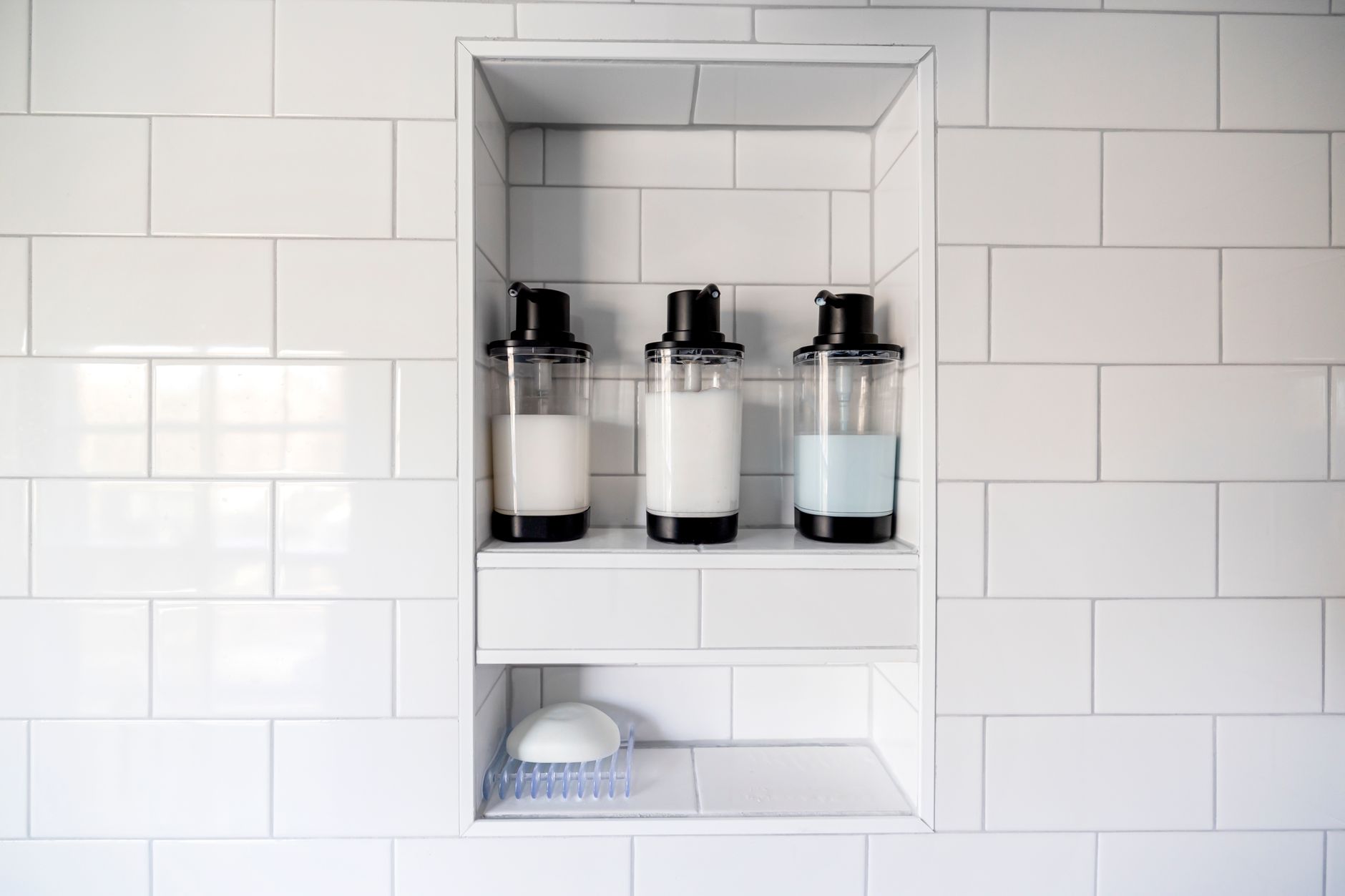
A shower niche is a recessed shelf built into the wall of your shower, giving you a spot to store shampoo, soap and razors without cluttering the floor or relying on suction hooks that fall off after a fortnight.
Good shower storage matters more than people expect. A cluttered shower with bottles balanced on the tap or a wire caddy hanging off the showerhead looks messy and makes cleaning harder. A well-placed bathroom niche keeps everything tidy and, if it's tiled to match the rest of the shower, practically disappears into the wall.
The three main paths to shower storage are a fully built-in tiled niche, a prefabricated metal insert, or a corner shelf/caddy that sits on top of the existing tiles. Each has a very different cost, installation process and waterproofing risk, which is what this guide breaks down.
Built-in Tile Niches Explained
A built-in niche is framed out during the shower wall construction (or cut into an existing stud wall), waterproofed like the rest of the shower, then tiled to match the surrounding walls. It's the option most people picture when they think of a proper shower niche.
The appeal is obvious — it looks like it was always part of the design, holds a decent amount of gear, and adds a genuine "renovated bathroom" feel that shows up well in real estate photos if you ever sell.
The catch is that it has to be built during a full or partial bathroom renovation. You can't easily retrofit one into a finished tiled shower without ripping tiles off the wall, which is why this option is really only for people already renovating.
Waterproofing Requirements
This is where built-in niches live or die. Because the niche punches a hole into the wall cavity, every internal surface — top, bottom, sides and back — needs a waterproof membrane applied before tiling, fully compliant with AS 3740 (the Australian Standard for waterproofing wet areas).
The base of the niche should be sloped slightly forward so water drains out onto the shower wall rather than pooling inside. Corners need extra reinforcement with waterproofing tape or fillet, since flat membrane alone tends to crack at sharp internal angles over time.
Skipping or rushing this step is the single biggest cause of niche-related leaks and mould inside the wall cavity, so it's not somewhere to cut corners on a DIY job.
Cost and Installation Time
Expect to pay $400–$1,200 for a built-in niche, depending on size, tile choice and whether it's a single or double-shelf design. That figure includes framing, waterproofing membrane, and tiling labour.
Installation typically adds 1–2 days to a bathroom renovation timeline — framing and waterproofing on day one, tiling once the membrane has cured (usually 24 hours minimum per coat).
If you're using a tiler already on site for a full reno, the marginal cost of adding a niche is much lower than getting a tradie in just for that one job.

Prefabricated Metal Tile Inserts
Metal tile insert niches are pre-made boxes, usually in stainless steel or powder-coated finishes, that get set into a rough opening in the wall and tiled around (or left exposed as a feature, in brushed steel or matte black).
Brands like stainless steel shower niche insert are popular because they arrive fully waterproofed at the factory — you're not relying on a tiler's membrane technique to keep water out.
Pros and Cons of Insert Kits
Pros:
- Factory-sealed, so waterproofing risk is much lower than a DIY-tiled niche
- Faster installation — no membrane curing time
- Consistent, clean finish with sharp edges
- Available in sizes from single-shelf to full double-cavity units
Cons:
- Visible metal trim doesn't suit every bathroom style (great for industrial/matte black looks, less so for classic subway tile bathrooms)
- Still requires cutting into the wall cavity, so it's a mid-reno job, not a retrofit
- Slightly limited size range compared to a custom-built niche
Prices sit around $150–$450 for the insert itself, plus installation labour of roughly $200–$400 if you're not doing it yourself. Total cost usually lands well below a fully custom tiled niche.
Corner Shelves and Caddies
If you're not doing a full renovation, a corner shelf or caddy is the realistic option. These sit on top of existing tiles rather than being built into the wall, so there's no cutting, no waterproofing membrane, and no tiler required.
Are corner shower caddies a good alternative to built-in niches? For renters and anyone not ready to gut their bathroom, yes — they solve the storage problem for a fraction of the cost. They're just not going to add the same visual polish or resale appeal as a proper bathroom niche.
Suction vs Fixed Corner Units
Suction-mounted caddies, like the OXO Good Grips suction shower caddy , grip the tile with rubber pads and can be removed without drilling. They're ideal for renters but can lose grip over time, especially on textured or slightly uneven tiles — expect to reposition or replace suction pads every 6–12 months.
Fixed corner shelves, such as tension-pole caddies or ones fixed with waterproof adhesive strips like 3M Command, hold more weight and stay put longer. A tension pole caddy that wedges between floor and ceiling, like the simplehuman tension shower caddy , can hold several shelves' worth of bottles without a single screw going into the tile.
Fixed metal corner shelves that are properly silicone-sealed to the tile (rather than glued with adhesive strips) last the longest and look the neatest, sitting somewhere between a caddy and a true niche in terms of polish.
Floating Shelves as an Alternative
A floating shelf — a single slim shelf fixed to the wall with a concealed bracket — is a good middle-ground option if you want something more permanent than a caddy but don't want to cut into the wall.
These need to be installed with a waterproof sealant around the mounting points and ideally fixed into a stud or with heavy-duty anchors rated for wet areas, such as the Zenith heavy duty wall anchors . A single glass or stone floating shelf typically costs $40–$120 plus a bit of silicone and a spirit level for the install.
The main downside is capacity — you generally get one shelf, not a multi-tier storage zone, so it suits a simpler shower routine rather than a house full of hair products.
Cost Comparison Table
| Option | Typical Cost (AUD) | Installation Time | Waterproofing Risk | Best For |
|---|---|---|---|---|
| Built-in tile niche | $400–$1,200 | 1–2 days | Higher (relies on trade skill) | Full renovations, resale value |
| Metal tile insert | $150–$450 + labour | Half a day | Low (factory sealed) | Mid-reno upgrades, modern styles |
| Fixed corner shelf | $30–$100 | 1–2 hours | Low (surface-mounted) | Budget updates, non-structural jobs |
| Suction caddy | $15–$40 | 5 minutes | None (no penetration) | Renters, quick fixes |
| Floating shelf | $40–$120 | 1 hour | Moderate (wall penetration) | Minimalist storage, no cavity access |
Which Option Suits Your Renovation Budget and Style
How much does it cost to install a shower niche in Australia? As the table shows, it ranges from under $20 for a suction caddy to over $1,000 for a fully tiled, custom built-in niche — so the honest answer depends entirely on what "niche" means to you.
Should I choose a tile insert or built-in shower niche? If you're already re-tiling the whole shower and want a seamless look, go built-in. If you want to save money and reduce waterproofing risk while still getting a clean, modern result, a metal insert kit is the smarter move for most renovators.
What is the best type of shower niche for a small bathroom? In a compact shower, a single-shelf metal insert or a narrow built-in niche works best — it adds storage without eating into shoulder room the way a bulky corner caddy can. Corner shelves also work well in small spaces since they use the dead zone in the corner rather than a full wall.
Do shower niches need special waterproofing to prevent leaks? Yes, absolutely, for anything that penetrates the wall — built-in niches and metal inserts included. Surface-mounted caddies and suction units don't penetrate the wall, so they carry no waterproofing risk, which is a genuine advantage if you're not confident in your tiler or your own DIY skills.
Final Recommendations for Australian Bathrooms
If you're mid-renovation with a tiler already booked, add a built-in niche or metal insert — the marginal cost is small compared to doing it as a standalone job later.
If you're updating on a budget or renting, a fixed corner shelf sealed with waterproof silicone gives you 80% of the benefit of a built-in niche for a fraction of the price and effort.
Avoid suction caddies as a long-term solution — they're fine for a share house or a temporary fix, but the constant repositioning gets old fast.
Bottom Line
There's no single "best" shower niche — it's a trade-off between cost, waterproofing risk and how permanent you want the solution to be. Full renovators should lean toward a built-in tile niche or metal insert for the cleanest, most durable result. Everyone else can get genuinely good shower storage from a well-fixed corner shelf without touching the tiles at all.