How to Choose Bathroom Tiles: Size, Material and Layout Guide
Quick summary: Porcelain is the best all-round choice for Australian bathroom floors thanks to its low water absorption and durability, while ceramic works well on walls where cost matters more than foot traffic. Floors need a minimum R10 slip rating (R11 for showers), large format tiles (600x600mm or bigger) make small bathrooms feel more spacious, and a full bathroom retile typically costs $4,000–$12,000 supply and install depending on size and finish.
Why Choosing the Right Bathroom Tile Matters
Bathroom tiles aren't just decorative. They're a waterproofing layer, a safety surface and one of the biggest visual elements in a room you'll look at every single day.
Get it wrong and you're looking at slippery floors, grout that stains within a year, or a small bathroom that feels even smaller once the tiles go in.
Get it right and your bathroom looks bigger, stays cleaner, and holds its value when you sell. It's worth spending an extra weekend researching before you order anything.
Porcelain vs Ceramic vs Natural Stone
This is the first big decision, and it shapes almost everything else — budget, maintenance and even which layouts are practical.
Should I choose porcelain or ceramic tiles for a bathroom?
For floors, porcelain wins in almost every Australian bathroom. It's denser, less porous, and handles moisture better than ceramic. Ceramic is fine for walls where it's not copping constant water and foot traffic, and it's usually 20–30% cheaper.
Natural stone (travertine, marble, slate) looks stunning but needs sealing and more upkeep, so it suits feature walls or higher-budget renovations more than everyday floors.
What is the best tile material for bathroom floors in Australia?
Porcelain is generally the answer, particularly a full-body or through-body porcelain, because chips don't show a different colour underneath. Brands like Beaumont Tiles porcelain floor tile and ranges stocked at Bunnings under their National Tiles and Choices lines are common starting points for Australian renovators.
Durability and Water Resistance
Porcelain has a water absorption rate of less than 0.5%, compared to ceramic's 3–7%. In a wet area like a bathroom, that difference matters over 10–15 years of daily showers.
Natural stone varies widely — granite is tough, but limestone and travertine are more porous and need sealing every 12–24 months to stay water resistant.
Maintenance and Longevity
Ceramic and porcelain are both easy to clean with standard bathroom spray and a microfibre cloth. Stone needs pH-neutral cleaners only, since acidic products (even some bathroom mould sprays) can etch the surface.
Porcelain floors, properly installed, will comfortably outlast a 15–20 year renovation cycle. Ceramic on walls lasts just as long since it's not dealing with foot traffic or standing water.
| Material | Water Absorption | Best Use | Approx. Cost per m² |
|---|---|---|---|
| Ceramic | 3–7% | Walls, low-traffic areas | $25–$60 |
| Porcelain | <0.5% | Floors, showers, high-traffic | $40–$120 |
| Natural Stone | Varies (1–15%) | Feature walls, luxury floors | $80–$250 |
Tile Sizes and Their Visual Impact
Tile size changes how a bathroom feels far more than most people expect. Bigger tiles generally mean fewer grout lines, which reads as more open and continuous.
What size tiles make a small bathroom look bigger?
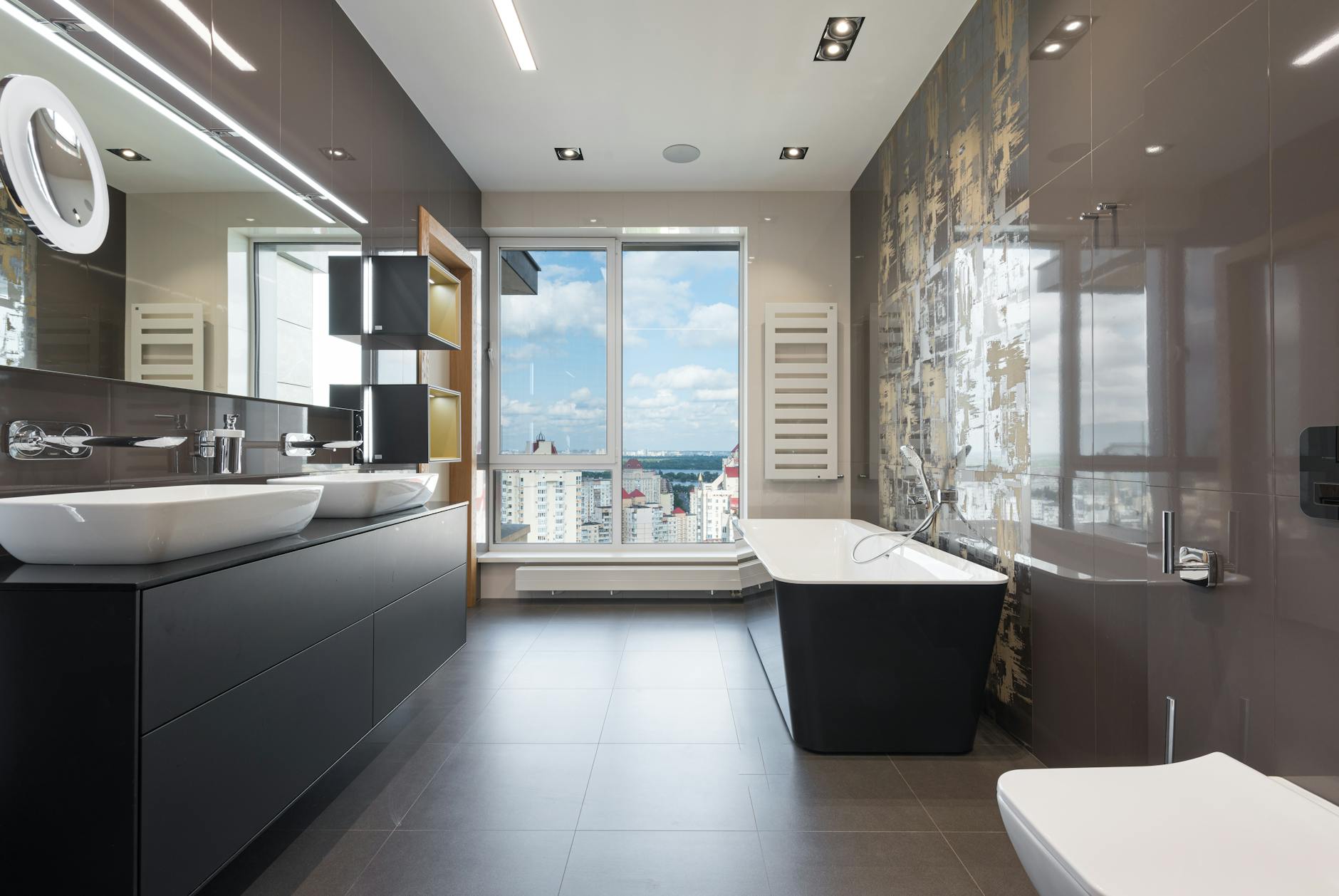
Large format tiles — 600x600mm, or rectangular 300x600mm — are the go-to choice for small Australian bathrooms right now. Fewer grout lines mean less visual "chopping up" of the floor, which tricks the eye into seeing more space.
Large Format Tiles for Small Bathrooms
Large format porcelain, like the 600x600mm matte porcelain floor tile , works especially well when laid in a single continuous run from the wet area through to the vanity zone. It also cuts down on grout lines to clean, which is a nice bonus.
The trade-off: large tiles need a very flat substrate, so budget for floor levelling compound if your existing slab or floorboards aren't dead flat.
Mosaic and Small Tiles for Detail Areas
Mosaics still have a place — shower floors, niches and feature strips. Small tiles (25mm–100mm) grip better underfoot because of the extra grout lines, and they can wrap around curves like shower bases where large tiles can't.
Glass mosaic sheets from Bunnings or Beaumont Tiles run roughly $60–$150 per sheet (around 30x30cm), so they're usually used sparingly as an accent rather than across a whole floor.
Popular Layout Patterns
The way you lay bathroom tiles can change the entire feel of the room, even using the exact same tile.
Is herringbone or subway tile better for a small bathroom?
Subway tiles laid in a simple running bond generally suit small bathrooms better because the pattern is calm and doesn't compete with a tight space. Herringbone is busier and works best on a feature wall or a larger floor where it has room to breathe.
Subway Tile Layouts
Classic subway tiles (typically 75x150mm or 100x200mm) laid in a brick pattern are a safe, timeless choice. They suit both period-style and modern bathrooms and are among the cheapest tiles to buy, often $20–$45 per m² for basic ceramic subway options.
A stacked (grid) layout instead of the traditional offset brick pattern gives subway tiles a more contemporary look, which is popular in current Australian renovations.
Herringbone and Stacked Patterns
Herringbone uses rectangular tiles laid at 45- or 90-degree angles to create a zigzag effect. It adds movement and a higher-end look, but it comes with more cutting waste (allow 15–20% extra tiles) and higher labour costs, since it takes tilers longer to lay.
Stacked patterns (tiles lined up in straight rows and columns) are the simplest and cheapest to install, and they work well with large format tiles to emphasise clean lines.

Understanding Slip Ratings for Wet Areas
What slip rating do bathroom tiles need for wet areas in Australia?
Australian Standard AS 4586 rates tiles from R9 (low slip resistance) to R13 (highest). For bathroom floors, most building certifiers and the National Construction Code expect a minimum of R10, and R11 or higher inside the shower recess itself where the floor is wet most often.
Look for the R-rating listed on the tile spec sheet or box — reputable Australian suppliers like Beaumont Tiles, National Tiles and Amber Tiles always list this. If it's not listed, ask before you buy, particularly for shower floors and bathrooms used by kids or older family members.
Matte and textured finishes are almost always more slip resistant than polished or gloss tiles, which is why most Australian bathroom floors avoid high-gloss finishes altogether, saving them for walls instead.
Choosing the Right Grout
How do I choose the right grout colour for bathroom tiles?
A general rule: match the grout to the tile for a seamless, larger-looking floor, or contrast it deliberately for a feature look (like white subway tiles with dark charcoal grout).
Light grout shows dirt and mould faster in wet areas, so many Australian bathrooms now use mid-grey or charcoal grout on floors even with white or light tiles, purely for practicality.
Epoxy grout, like Mapei Kerapoxy epoxy grout , costs more (around $80–$120 per bag versus $25–$40 for standard cement-based grout) but resists staining and mould far better, which makes it worth it for shower recesses.
Standard cement-based grout should be sealed annually with a product like grout sealer spray to keep it water resistant and stain-free.
Cost Considerations and Australian Suppliers
How much does it cost to tile a bathroom in Australia?
For an average Australian bathroom (around 6–10m² of floor and wall combined), expect:
- Budget ceramic tiles and standard install: $4,000–$6,000
- Mid-range porcelain with a feature wall: $6,500–$9,000
- Premium porcelain or natural stone with herringbone/mosaic detailing: $9,000–$12,000+
These figures include tiles, waterproofing, adhesive, grout and professional labour. Labour alone typically runs $50–$90 per m² for standard layouts, rising to $90–$140 per m² for herringbone or mosaic work due to the extra time involved.
Popular Australian suppliers include Beaumont Tiles, National Tiles, Amber Tiles and Bunnings for budget-friendly ranges. Reece and Candana are worth a look for higher-end porcelain and stone options if you're after something a bit different from the mainstream ranges.
Final Tips for a Successful Tile Selection
Order at least 10% extra tiles to cover cuts, breakages and future repairs — dye lots change, so you may not get an exact match later.
Always check the slip rating before falling in love with a polished floor tile. A beautiful tile that's dangerous underfoot isn't worth the risk, especially in a family bathroom.
Get a physical sample home and look at it in your actual bathroom lighting, morning and night, before committing. Tiles can look completely different under showroom lighting versus your own bathroom.
Bottom Line
For most Australian bathrooms, matte porcelain in a large format size, laid in a simple pattern, with an R10–R11 slip rating, is the safest and most cost-effective choice. Save herringbone, mosaics and natural stone for feature areas where they'll have the most visual impact without blowing the budget or compromising safety underfoot.